Drifter science!!

Here is a very funny educational video from the Carthe group (University of Miami). How physical oceanographers study and track currents and why it is important.

Very useful data if you want to know where our precious plankton is going! Just watch! funny and instructive.

Video credit: Laura Bracken (CARTHE), Patrick Rynne (Waterlust) and Fiona Graham (Waterlust), Sharon Chinchilla (CARTHE) and Jennah Caster (Waterlust)

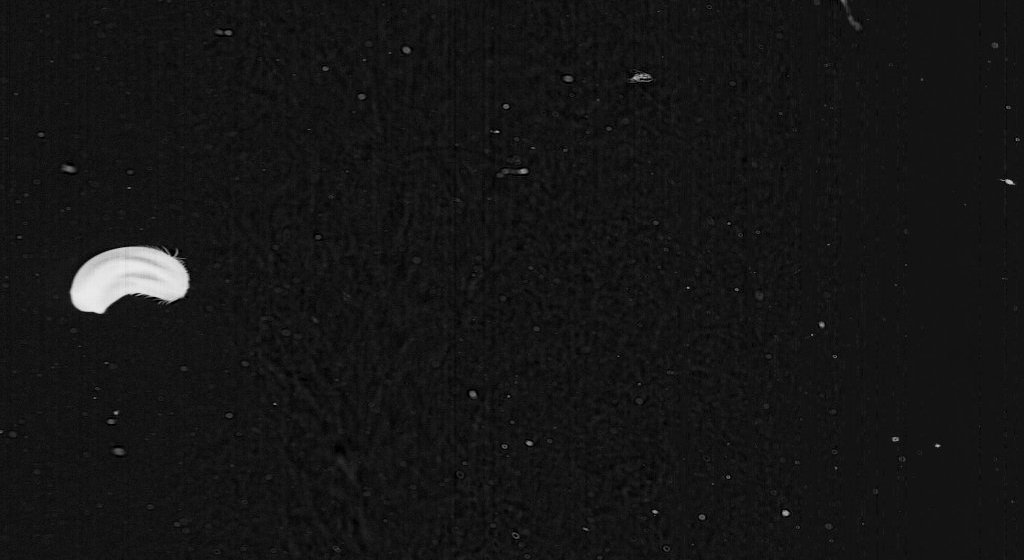
Ctenophore, a soft bodied but voracious predator

Also known as Comb jellies or sea gooseberries. The name comes from the Greek Ctena (comb) and Phora (bearer). They first appeared more 500 million years ago!

51d1bd983ae74008a400c137

A little Beroida

These are plankton predators which can swim with the help of a several rows of cilia. Some catch their food with long fishing tentacles laden with sticky cells (colloblast) like the #Cydippids.

51d1bd833ae74008a40013bd

Cydippid showing its deadly tentacles

Others can engulf their meal directly like the #Lobates. They can consume anything from other ctenophores, copepods to fish larva. The weirdest of all is the #Cestida which body plan is totally flat, yet it has all the attributes the Ctenophore group!

51d1bd903ae74008a4007866

Lobate ctenophore ready to engulf anything in its path.

51d1bd893ae74008a400410f

Cestida the weirdest of all. it body is flat and shaped like a ribbon

One species (Mnemiopsis Leidyi) was accidentally introduced in the black sea via ship ballast water coming from the Atlantic Ocean. Result: local fisheries collapsed due to M. Leidyi appetite for fish larvae.

Here is an amazing Ctenophore video from our Plankton Chronicles colleagues. Shimmering waves of light, stalking their prey, ctenophores are on the move.
Plankton Chronicles Project by Christian Sardet, CNRS / Noe Sardet and Sharif Mirshak, Parafilms
See Plankton Chronicles interactive site: planktonchronicles.org

Congratulations to Dr. Adam Greer!

A big congratulations to Dr. Adam Greer, who defended his dissertation on Friday. The title of his dissertation is, “Fine-scale distributions of plankton and larval fishes: Implications for predator-prey interactions near coastal oceanographic features”

FirstSlideIn our Ph.D. dissertation defenses, we give a 1-hr talk on our research (imagine trying to cram in 5+ years of work into 1 hour!) and then we have a closed-door session with our Ph.D. committee where we answer questions and ‘defend’ our research.

Adam did fabulously on Friday and successfully defended! He will be finishing the writing this month and then moving to on as a Post-doctoral researcher at the University of Georgia. Congratulations, Dr. Greer!

Fantastic Find Friday Take 3!

Hey plankton hunters!  Welcome to our 3rd round of Fantastic Find Friday here at Plankton Portal.  There have been so many awesome finds on the site and we picked 5 this week for you to check out.  If you see something really neat on the portal than tag it with #FFF so we can check it out for use on the blog.  Here we go!

Physonect Siphonophore— #Sipho #Corncob

http://talk.planktonportal.org/#/subjects/APK0000iu4

51d1bd8e3ae74008a4006d0e

This is a stunning capture of a physonect siphonophore who seems to be waving hello to ISIIS as she passes by.  Like all siphonophores, this guy here is a colonial organism comprised of many individual animals or ‘zooids.’  Each zooid is specialized and distinct, but work together so closely that they more resemble a single organism than a colony of animals.  On display here are the branching tentacles used for foraging and the swimming bells that resemble a corncob.  This one is a stunner!

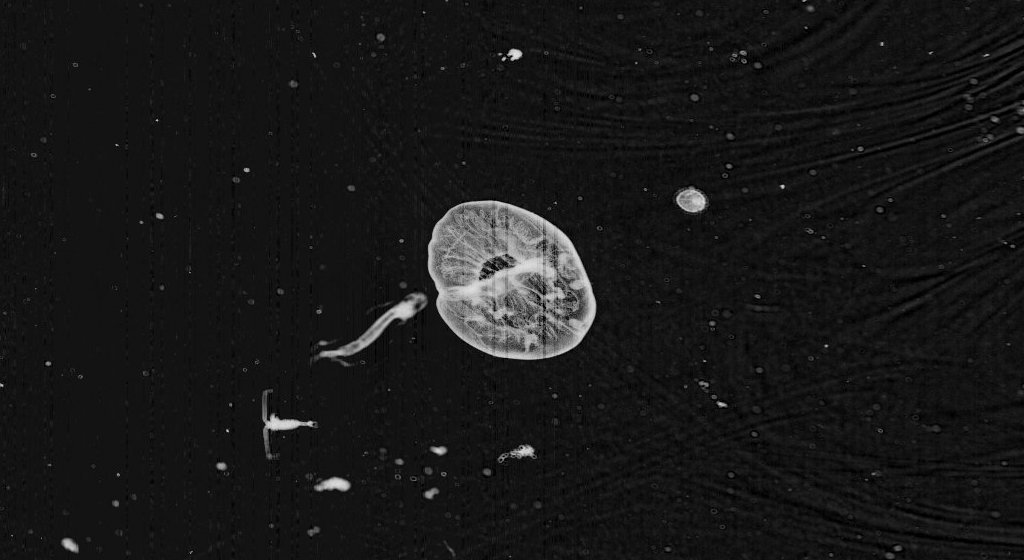
Lobate Ctenophore — #Lobate

http://talk.planktonportal.org/#/subjects/APK0000l30

51d1bd903ae74008a4007882

This is a really neat capture of a lobate ctenophore (Ocyropsis maculata), showing off the feature that gives this guy his name.  In this image you can see clearly the internal structure and the striated texture of his muscular, gelatinous body.  Lobate ctenophores swim lobes forwards by beating the ciliated comb rows situated on the opposite (aboral) end.  The one depicted here would be swimming towards us and to the left.  I wonder if larvacean is on the menu?

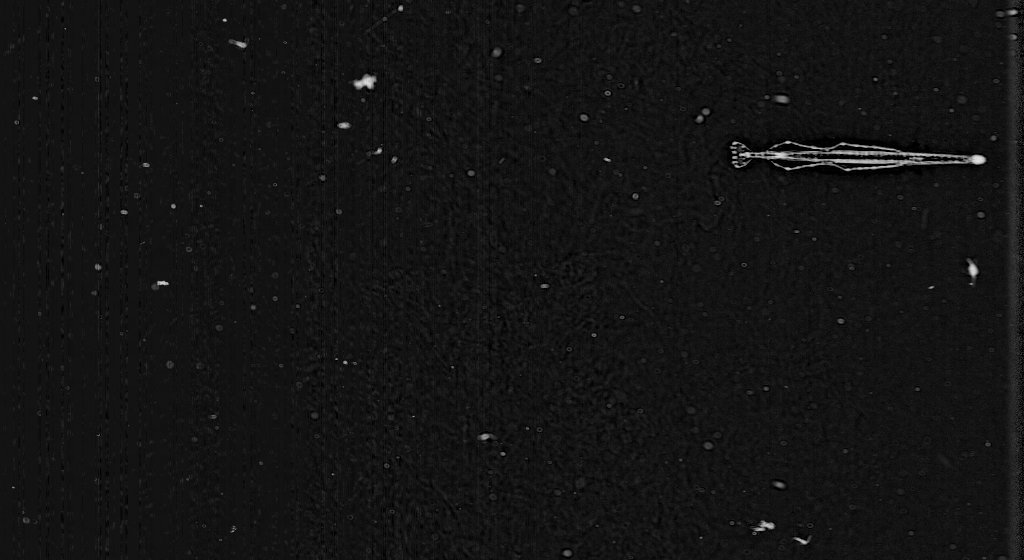
Chaetognath — #Arrowworm

http://talk.planktonportal.org/#/subjects/APK0000hpr

51d1bd8d3ae74008a4006758

Looks like an arrow shot by some undersea archer, right?  Arrow worms, or chaetognaths, are carnivorous marine worms belonging to the Phylum Chaetognatha.  They are notoriously ferocious predators that hunt other plankton with the help of hooked ‘grasping spines’ that flank the mouth.  Chaetognaths have fins for propulsion and steering—you can see all of them really well in this capture!  While these fins superficially resemble those of a fish, they are not related evolutionary and are structurally very different.

Calycophoran Siphonophore — #Rocketship #Triangle

http://talk.planktonportal.org/#/subjects/APK0000k4m

51d1bd903ae74008a40073a5

I bet NASA would get a lot more funding if they built space shuttles that looked like this!  This beautiful capture of a siphonophore really looks to me like some sci-fi monster a (horrified) astronomer might see in a telescope!  Don’t worry though, this guy is just a couple of cm’s long and probably couldn’t hurt you if he tried.  Just like the physonect siphonophore above, this guy is a colonial organism and would therefore be more appropriately referred to as guys.  The tail, or stem, on display here contains two developmental stages of siphonophore simultaneously—both the medusa and polyp stages.  Unlike most cnidarians that alternate between these stages generationally, this guy chooses to have them coexist within the same colony.  If you look closely you can see them bickering over who is the prettiest!

Calanoid Copepod — #Copepod

http://talk.planktonportal.org/#/subjects/APK00005l6

51d1bd843ae74008a4001c98

This copepod is making a heart with his antennae! Do you think he might be in love?  There is some 13,000 species of copepod in the world and they are a crucial component of plankton communities and global ecology in general.  It has been suggested that copepods may comprise the largest animal biomass on the planet! Many species of marine life, large and small, rely on these guys as their main food source, including whales and seabirds.  Looks like this guy here is a lover not a fighter!

Looking forward to next time !
What’s the goal of this research project?

The underlying objective of this research project is centered on a small-scale front and its associated biological activity. A front is a meeting of two water masses, and oceanic fronts are generally broken up into several broad categories, depending on the physical environment and phenomenon that cause these water masses to converge. Oceanographers have been interested in fronts for a long time, because they tend to be areas of high productivity. The elevated productivity at fronts is a result of the converging water masses physically aggregating many marine organisms.

Small-scale fronts are, as the name suggests, smaller in spatial scale: they tend to occur on the order of tens of kilometers instead of hundreds to thousands of kilometers like some of the other major fronts. Small-scale fronts occur frequently, but have also been harder to describe because they are more ephemeral than large fronts.

samplingsite

Sampling region in the Southern California Bight (SCB)

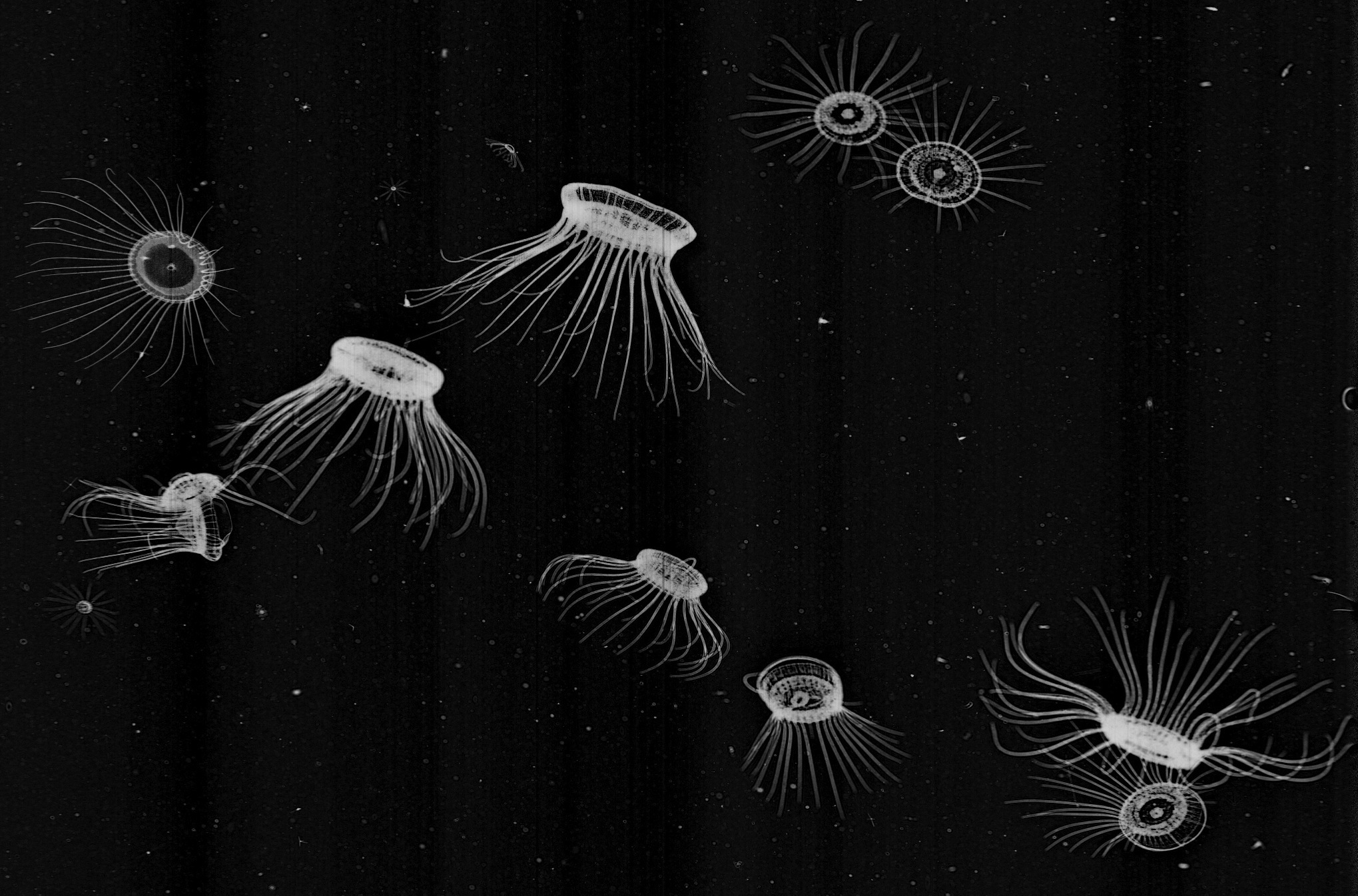
We set out to study one particular small-scale front in the Southern California Bight (SCB, see map for study region) because it was in an area that has received long-term oceanographic investigation – it is always good to do studies where there is lots of baseline data. We were primarily interested in exploring what biota was out there and seeing if there was biological aggregation at the front.  Indeed there was! We saw a large aggregation of our now favorite jellyfish, Solmaris rhodoloma, at the front and described it in a 2012 research paper. You don’t have to worry about reading it. It basically says what I just told you: we found a lot of Solmaris at this small-scale, salinity-driven front.

Solmaris rhodoloma aggregation

Solmaris rhodoloma aggregation

One of the interesting things about Solmaris is that they are part of a family of medusae that predate exclusively on other gelatinous zooplankton. They have been known to eat arrow worms and doliolids, but now, because of our images, we also think they are eating larvaceans and small siphonophores as well. So finding the large aggregation of Solmaris actually generated another research question for us: what’s going on with the rest of the gelatinous zooplankton at and around this front? What are the main processes driving their distribution? Is predation pressure from Solmaris affecting them in any way?

It turns out that the second question is much harder to answer than you would think. Not knowing exactly what Solmaris is eating, and how long they’ve been accumulating at the front makes it difficult for us to tell if they’re just happening upon a patch of prey or they have already eaten everything around them. One approach is to determine the movements and directions of the organisms, which is why we’re asking you to measure their orientation. We hope that knowing their orientation (and that of their potential prey) can help us model their movement patterns and “age” the Solmaris aggregation, so to speak. Of course, it’s possible that even with this data we will still not be able to determine how long Solmaris has been aggregating at the front. However, this kind of orientation information has never been acquired for jellyfish of this size and at this scale, so any data we gather will be new and interesting!

This is just one of many questions that Plankton Portal can help answer.  The biological data contained within these images can bring us closer to a greater understanding of zooplankton ecology in general.  Understanding the abundance, distribution and biomass (that’s where the size measurements come in) of this extremely understudied group of organisms – the small gelatinous zooplankton – can help us assess their broader impact in the marine food web, contribution to carbon cycling, and even help us learn how to identify hotspots of marine productivity in the future. This is how research grows and develops: it starts from a small, initial question (“hmm, I wonder if there is anything interesting at a small offshore front?”), which leads us to additional questions, and down the road, will hopefully help mankind appreciate and better protect its precious marine resources.

Thank you for your help and participation in Plankton Portal – you are contributing to a more knowledgeable future and hopefully one where we can better care for the sea around us.